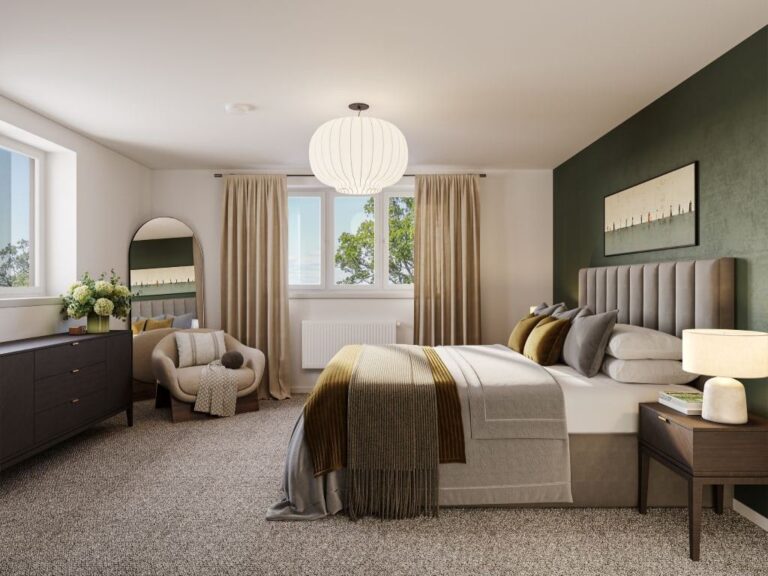
 A five-bedroom home can give a large or growing family more personal space, somewhere to work or study away from the kitchen table, capacity for guests, and rooms that can change purpose as the household changes. The value is not in having five rooms labelled as bedrooms. It is in what those rooms allow your family to do day to day.
More bedrooms only help if your household has a useful purpose for the space. A fifth room that sits empty most of the year adds cost and cleaning rather than comfort.
The question worth settling before you start viewing is whether five bedrooms would make everyday life more practical for your family, or whether a four-bedroom home with better shared space would suit you more.
What are the advantages of a five-bedroom home for a large family?
The main advantages of a five-bedroom home for a large family are more personal space for each member of the household, somewhere to work or study away from sleeping and living areas, capacity for relatives or adult children to live with you, a room that stays available for guests, and rooms that can change purpose over time.
More room for family members to have their own space
Separate bedrooms matter most when the people sharing a home keep different hours. A primary-age child settling at half past seven and a teenager revising until ten need different things from the same few hours of the evening, and sharing a room forces one of them to work around the other.
A five-bedroom home also gives family members somewhere to go when the main living areas are busy. That might be a bedroom large enough to sit and read in, or a quieter room at the other end of the house. Think about where each person would realistically sleep, work and keep their belongings, rather than counting rooms on the plan.
Work and study do not have to compete with sleeping space
Home working at the kitchen table works until several people need the kitchen. Calls run into homework, laptops get cleared away for dinner, and paperwork ends up in whichever room happens to be free.
Should you only need four sleeping spaces, a fifth room gives work and study somewhere permanent. It matters most when more than one person needs quiet at the same time, for example a parent on a call while an older child revises and younger children watch television. The rest of the house stays usable while both of those things happen.
More options for multigenerational living
An additional bedroom can give an adult child, a parent or another relative somewhere of their own without anyone moving out. Families can stay under one roof while keeping more personal space than a four-bedroom layout usually allows.
Bedroom count is only part of this. Whether a home genuinely suits multigenerational living also depends on stairs, ground-floor bathroom access, where the bedrooms sit in relation to each other and how much privacy each part of the home offers. Check those on the floorplan rather than assuming the fifth bedroom settles it.
Guests can stay without taking over an everyday room
A dedicated guest bedroom means visiting friends and relatives have somewhere to sleep that nobody else has given up. The living room does not become a bedroom for the weekend, children are not moved in together, and the office stays an office.
For families whose relatives visit regularly, that removes a recurring disruption rather than a one-off inconvenience.
Rooms can change purpose as the household changes
Rooms in family homes rarely keep one job for long. A nursery becomes a child’s bedroom, then a teenager’s room, then a study once they leave, then a guest room, then somewhere for an adult child who moves back for a while.
A five-bedroom home does not guarantee you will never move again. What it does is give you more ways to respond when circumstances change, which is a more useful thing to buy than an extra bed.
 Why can a five-bedroom home work so well for a large family?
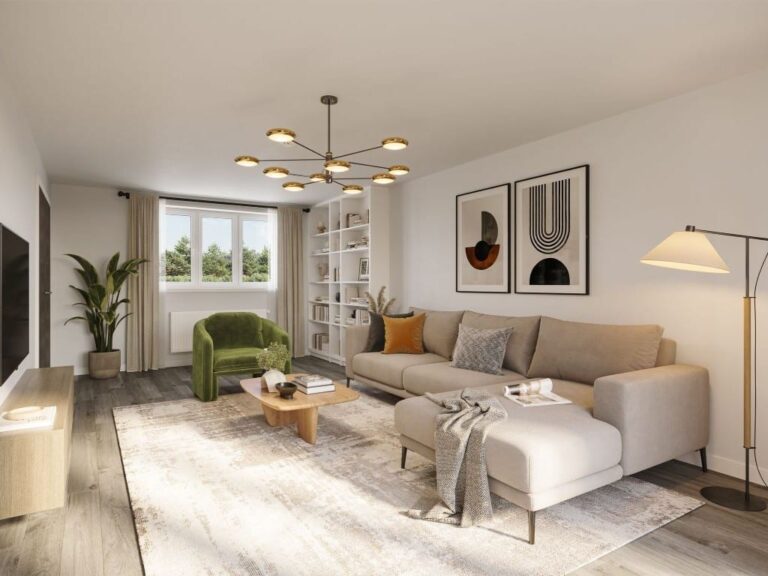
Extra space makes a practical difference because several people often need different things from the home at the same time. A five-bedroom layout reduces competition for the same few rooms, which is usually what makes a smaller home feel cramped long before anyone runs out of somewhere to sleep.
In a busy household, sleeping, working, studying, playing, hosting and relaxing all happen across the same evening. Additional rooms let personal and shared space separate more cleanly. Children can play without taking over the room the adults are using, and a change in routine does not mean reorganising the house around it.
Who is a five-bedroom home most suitable for?
A five-bedroom home suits households that can give each room a regular job. That usually means larger or growing families, homes where someone works from home, families who host often, or households expecting their composition to change over the next few years.
It may particularly suit:
- Larger families where several children need separate bedrooms
- Growing families planning for space they will need later
- Blended families bringing different household members together
- Families with adult children living at home
- Households considering multigenerational living
- Families who regularly have relatives or friends to stay
- Households where one or more people work from home
- Families who need dedicated study, hobby or play space
A five-bedroom home will not automatically be the better choice for every family. How your household intends to use the rooms matters more than the bedroom count on the listing.
The fifth bedroom does not have to stay a bedroom
The strongest reason for an additional bedroom is often flexibility rather than permanent sleeping capacity. A fifth room can take on whatever your household needs most at the moment, and change again later.
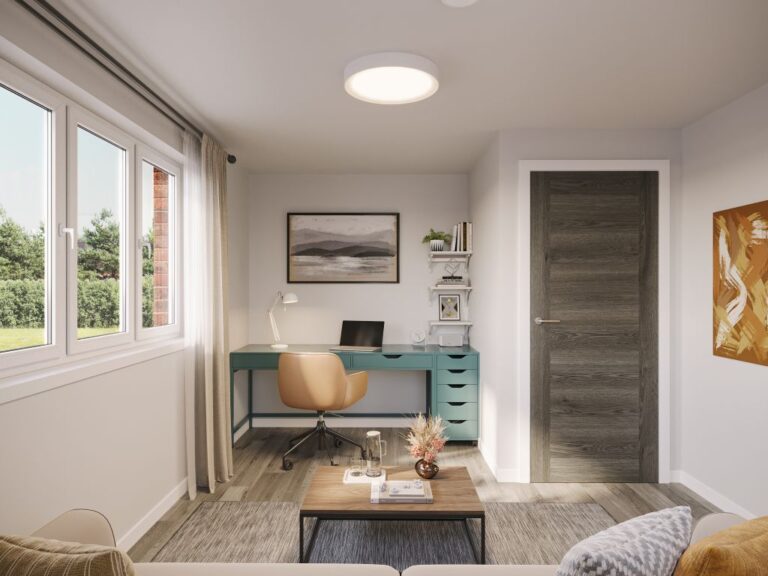 A permanent home office
A dedicated office keeps laptops, chargers and paperwork out of the kitchen and dining room. It is most valuable where home working is regular rather than occasional, because a workspace you can close at the end of the day is easier to live with than one you clear off the table each evening.
Homework or study room
A separate study gives older children somewhere quiet for homework, revision or online lessons. It earns its place when more than one person needs to concentrate at the same time.
Playroom or games room
Moving toys or a games console out of the main sitting room keeps that space usable for everyone. This works best when the room sits close enough to the kitchen or living area for younger children to stay within earshot.
Guest bedroom
Keeping the fifth room as a guest bedroom suits households with frequent overnight visitors. It is the simplest use of the room, and often the first thing families give up when another need becomes more pressing.
Hobby or exercise space
Some households use the room for exercise equipment, music practice, sewing or model making. The activity matters less than the principle. The room is there to take on whatever the household is short of.
Four bedrooms or five: which suits your family better?
Five bedrooms are not automatically better than four. The right choice depends on whether your household has a real use for the extra room, and on what the rest of the floorplan gives up to provide it.
| A five-bedroom home may suit you when… | A four-bedroom home may be enough when… |
| Most bedrooms have a regular purpose | The fifth bedroom would usually remain empty |
| Several children need separate bedrooms | Children are comfortable sharing |
| You need permanent work or study space | Home working is occasional |
| Guests or relatives stay regularly | Overnight guests are uncommon |
| Your household may change over time | Your space requirements are relatively stable |
Alongside the number of rooms, compare bedroom sizes, kitchen and dining space, storage, utility arrangements, parking and outdoor space. The number and position of bathrooms matter too, particularly when deciding how many bedrooms and bathrooms your family actually needs for busy mornings and evenings.
If you are still weighing up four bedrooms against five, comparing the wider range of New Homes at Graven Hill can help you judge the difference between layouts rather than choosing on bedroom count alone.
Ready to find your new home at Graven Hill?
If that combination of personal space, permanent work or study space and adaptable rooms suits your household, the next step is to compare the layouts of current 5-bedroom homes at Graven Hill, where current availability, floorplans and specifications are listed plot by plot.
These homes come with high-quality fixtures, fittings and integrated kitchen appliances as standard, a 10-year structural warranty, and current plots typically include a separate study and utility room, so work and laundry both have somewhere that is not the main family space.
If you would rather talk it through first, talk to our Sales team about your options or call 01869 390 009.
FAQs about five-bedroom family homes
Is five bedrooms too many for a family?
Only if the rooms go unused. Five bedrooms may be unnecessary where two or three rooms would sit empty for most of the year. They are worth having when the household has defined uses for the additional space, such as separate bedrooms, a study, a guest room or a playroom.
Is a 5-bedroom home suitable for a growing family?
Yes. Rooms can change purpose as children arrive, grow up and eventually leave. The extra room gives you more ways to adapt without moving. Check that the floorplan allows rooms to swap roles without making the rest of the home awkward.
Can the fifth bedroom be used as an office or guest room?
Yes. A fifth bedroom works well as a home office, study, guest room, playroom or hobby space, and many households change its use more than once. Look at the room size, natural light and power points, and think about whether its position in the house suits the use you have in mind.
What should I check before buying a five-bedroom house?
Check bedroom sizes rather than just the count, the number and location of bathrooms, the size of the kitchen and living areas, storage on both floors, parking and outdoor space. Then confirm that the fifth bedroom has a realistic purpose in your household, and what the home will take to run.
Are five-bedroom homes more expensive to run?
Running costs do not depend on bedroom count alone. Energy efficiency in larger homes is also shaped by construction, insulation, the heating system, the controls and how the household uses the property, so two five-bedroom houses can cost very different amounts to run.